
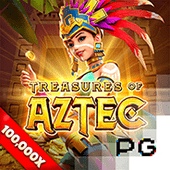
Treasures of Aztec
Journey Through Ancient Mesoamerican Civilizations and Uncover Legendary Treasures
The Academic Study of Aztec Civilization
From the perspective of classical historical research, the Treasures of Aztec slot game presents a fascinating virtual expedition through one of Mesoamerica's most sophisticated pre-Columbian civilizations. As scholars of ancient cultures well understand, the Aztec Empire (1428-1521 CE) represented the pinnacle of Nahua civilization, featuring remarkable achievements in architecture, agriculture, astronomy, mathematics, and complex sociopolitical organization that continues to captivate researchers and enthusiasts alike.
This meticulously crafted gaming experience transports players to the heart of the Aztec capital of Tenochtitlan, where the grandeur of temple-pyramids, the sophistication of chinampa agricultural systems, and the intricate cosmology that guided daily life all converge into an immersive educational journey. The attention to archaeological and historical detail demonstrates commendable respect for authentic cultural representation, offering players not merely entertainment but a window into the richness of Aztec cultural heritage.
For those seeking to explore comparative Mesoamerican mythology and religious symbolism, we recommend examining Wisdom Of Athena, which provides insight into ancient Greek divinatory traditions, offering valuable cross-cultural perspective on classical civilizations.
Historical and Cultural Significance
The Aztec Empire: A Brief Scholarly Overview
The Aztec civilization, known historically as the Mexica, emerged from the legendary homeland of Aztlan to establish one of the most powerful empires in Mesoamerican history. Their capital, Tenochtitlan (modern-day Mexico City), was founded in 1325 CE on an island in Lake Texcoco and grew to become a magnificent metropolis of 200,000-300,000 inhabitants at its zenith—comparable to contemporary European cities like Paris or Venice.
Architectural and Engineering Marvels
Aztec architects and engineers demonstrated extraordinary sophistication in their construction techniques. The Templo Mayor (Great Temple) in Tenochtitlan stood approximately 60 meters tall, dominating the city's sacred precinct. This twin-temple pyramid dedicated to Huitzilopochtli (god of war and sun) and Tlaloc (god of rain and agriculture) exemplified the Aztec understanding of astronomical alignment, religious duality, and architectural symbolism—all elements thoughtfully incorporated into this game's visual design.
Writing, Mathematics, and Calendar Systems
The Aztec writing system combined pictographic and ideographic elements, recording historical events, tribute payments, and genealogical information in codices that rivaled medieval European manuscripts in complexity and informational density. Their mathematical system employed a base-20 (vigesimal) numeral system, while the Xiuhpohualli (solar year) and Tonalpohualli (sacred calendar) created a 52-year calendar cycle that governed agricultural, religious, and ceremonial activities throughout the empire.
Gameplay Mechanics and Academic Value
Educational Gaming Experience
While primarily designed as entertainment, the Treasures of Aztec slot incorporates numerous authentic historical and cultural elements that provide genuine educational value. Symbol representations draw from verified archaeological findings, temple reconstructions follow established architectural principles, and background environments reference actual geographical features of the Valley of Mexico. Players familiar with Aztec iconography will recognize authentic representations of:
- Quetzalcoatl - The Feathered Serpent deity, central to Aztec creation mythology
- Xiuhcoatl - The Fire Serpent weapon associated with Huitzilopochtli
- Atl-atl - The distinctive spear-thrower used by Aztec warriors
- Chalchiuhtlicue symbols - Representing the goddess of running water
- Cacao beans - Used as currency in Aztec commerce
Mathematical and Strategic Elements
The game's mechanics incorporate elements that mirror Aztec mathematical thinking, particularly their base-20 numeral system and sophisticated understanding of probability in their calendar calculations. Strategic gameplay requires analytical thinking reminiscent of the intellectual exercises valued in Aztec calmecac schools for nobles and priests.
Comparative Mesoamerican Studies
For scholars and enthusiasts interested in broader Mesoamerican cultural comparisons, the Aztec civilization shared fundamental cultural elements with other classical civilizations while maintaining distinctive characteristics. The game provides opportunities to explore:
- Ballgame Rituals: The Mesoamerican ballgame (ullamaliztli) held profound religious and political significance across civilizations from the Olmec to the Aztec
- Agricultural Innovations: Chinampa (floating garden) systems represented engineering prowess that sustained large urban populations
- Trade Networks: Extensive commercial routes connected the Aztec Empire with distant regions from modern-day United States to Central America
- Artistic Traditions: Featherwork, stone sculpture, and codex painting reached remarkable levels of sophistication
Players interested in exploring other aspects of Catheter's gaming offerings, including strategies for responsible gameplay and understanding modern gaming platforms, may find value in examining Catheter Earn Money resources, which provide contemporary gaming context alongside historical appreciation.
Archaeological Discoveries and Modern Interpretations
The Templo Mayor Project
Since 1978, archaeological excavations at Mexico City's Templo Mayor have uncovered thousands of artifacts, including offering caches containing jade, obsidian, coral, and elaborate ceramic vessels. These discoveries have fundamentally transformed our understanding of Aztec religion, economy, and daily life. This game's visual elements clearly draw inspiration from these archaeological finds, bringing museum-quality representations to an interactive format.
Recent Technological Advances
Modern archaeology employs LiDAR scanning, ground-penetrating radar, and 3D photogrammetry to map Mesoamerican sites without physical excavation. These technologies have revealed previously unknown structures, settlement patterns, and agricultural systems throughout central Mexico. The detailed environments in Treasures of Aztec reflect this new generation of archaeological visualization.
Cultural Heritage and Preservation
Contemporary Mexican archaeology emphasizes collaboration with indigenous communities whose cultural heritage these sites represent. The game's respectful treatment of Aztec cultural elements aligns with modern ethical standards for cultural representation, avoiding stereotypes while celebrating genuine historical achievement.
Begin Your Historical Expedition
Experience the grandeur of Aztec civilization while enjoying premium slot gameplay at Catheter Casino. Register now and claim your welcome bonus!
Related Historical and Cultural Games
Explore these additional games that celebrate ancient civilizations and cultural heritage:







Frontier and Western Historical Themes
For scholars interested in comparative historical periods, the American West frontier era represents another fascinating period of cultural transformation, technological advancement, and social reorganization. Players may explore this period through Wild Bounty Showdown, which examines the legendary bounty hunting culture that emerged during the westward expansion of the United States—a historical phenomenon that shares interesting parallels with the warrior culture of the Aztec Empire in terms of social prestige, economic opportunity, and the intersection of individual skill with communal values.
Both civilizations—though separated by time, geography, and cultural context—developed sophisticated systems for rewarding exceptional individual achievement within highly structured social hierarchies, demonstrating universal human patterns that transcend specific historical contexts.
Academic and Gameplay FAQ
What historical period does Treasures of Aztec depict?
The game represents the Aztec Empire during its Postclassic period (approximately 1428-1521 CE), specifically focusing on the reigns of emperors such as Moctezuma I (1440-1469) and Moctezuma II (1502-1520), when Aztec military, cultural, and architectural achievements reached their zenith prior to the Spanish arrival.
Are the symbols and icons historically accurate?
The game developers have clearly consulted archaeological sources, with symbols drawn from authentic Aztec codices, temple inscriptions, and museum artifacts. While artistic license is necessarily taken for gameplay purposes, the fundamental representations demonstrate respect for historical accuracy and cultural sensitivity.
What educational value does this game offer?
Beyond entertainment, Treasures of Aztec provides exposure to authentic Aztec iconography, architectural concepts, and cultural motifs that may spark interest in Mesoamerican history. Players are encouraged to use the game as a starting point for deeper historical inquiry rather than as a primary educational resource.
How does this game compare to other historically-themed slots?
Treasures of Aztec distinguishes itself through its commitment to archaeological accuracy and cultural authenticity. Unlike many games that superficially adopt historical themes, this title demonstrates genuine research and consultation with historical sources, setting a commendable standard for culturally responsible game design.
Can I play Treasures of Aztec on mobile devices?
Yes, Catheter Casino offers full mobile optimization through the Catheter App for both iOS and Android devices. The historical detail and visual quality remain exceptional across all platforms, allowing for scholarly exploration wherever you choose to play.
Embark on Your Aztec Scholarly Expedition
Join Catheter Casino today to experience the perfect fusion of historical education and premium slot gaming. Your journey through Aztec civilization awaits!